Best Student Tours United States: An Editor’s Guide
The orchestration of student travel within the United States is frequently reduced to a logistical exercise, a series of bookings, bus transfers, and headcount checks. This perspective is fundamentally insufficient for those seeking to transform travel into a developmental catalyst. For organizers and families, the challenge lies in the “curated experience” paradox. Modern travel for students is often hyper-scheduled to ensure maximum exposure to sites and cultural landmarks, a model that frequently ignores the neurobiological need for integration of the quiet, unscripted periods where true learning and synthesis occur. A program that treats every waking moment as a “teachable opportunity” often ends up providing little more than sensory overload. The most successful experiences, by contrast, balance high-intensity learning modules with deliberate, structured downtime, allowing the adolescent nervous system to process the novelty of the environment.
This article provides an analytical framework for evaluating the landscape of student travel. It moves past the glossy marketing of tour providers to examine the systemic requirements of a transformative journey. By identifying the architectural elements of effective educational travel, we can ensure that time spent on the road translates into lasting gains in resilience, independence, and social capability. The goal is to provide a definitive reference that empowers decision-makers to move beyond superficial metrics and select programs based on operational integrity and long-term educational utility.
Understanding “best student tours united states.”
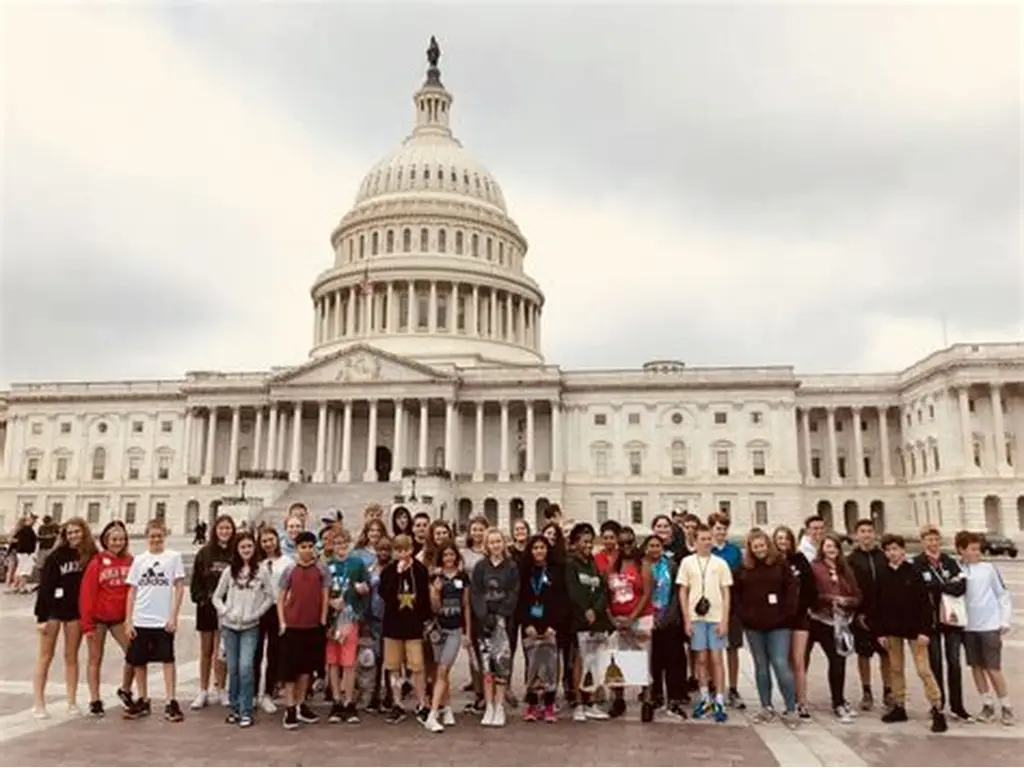
The inquiry into the best student tours united states is often hampered by the “all-encompassing” fallacy. Planners attempt to identify a singular “best” provider, failing to acknowledge that the quality of an experience is entirely contingent upon the specific mission of the group and the developmental readiness of the participants. What serves a high-achieving STEM cohort in a research-heavy urban hub may be entirely inappropriate for a group seeking foundational cultural immersion in a rural setting.
Oversimplification poses the primary risk here. Many commercial providers market themselves as “transformative” by listing a density of activities that would exhaust even a seasoned professional traveler. To distinguish between true educational value and high-end tourism, one must evaluate the program’s structural philosophy: Does the itinerary exist to serve the student’s growth, or is it designed to justify a high price point through “activity-density”? A truly effective program prioritizes depth over breadth, ensuring that the student is an active participant in their own education rather than a passive recipient of guided information. Identifying the former requires a forensic look at the operator’s vetting processes, instructor-to-student ratios, and, crucially, their capacity for unscripted problem-solving.
Historical and Systemic Evolution of Youth Mobility
The evolution of student travel is tied to the history of human mobility and educational institutionalization. In the early 20th century, travel for students was largely elitist and sporadic. As the post-war era ushered in the rise of mass transit and the standardization of secondary and higher education, the “class trip” model became a systemic feature of the American academic experience.
By 2026, the landscape will have shifted from simple custodial management toward specialized, mission-driven programs. We are now in the era of “pedagogical integration,” where travel is expected to align with academic standards, professional skill-building, or leadership development. While this professionalization has greatly improved risk management and educational content, it has also introduced a layer of “credentialism” that can sometimes distract from the raw, unpredictable benefits of simple, self-directed exploration. The industry is currently bifurcating: one path leads toward hyper-curated, AI-optimized itineraries, while the other emphasizes the need for authentic, grounded, and human-centric engagement.
Conceptual Frameworks for Resource Loadout
-
The Agency-Scaffold Paradox: This framework evaluates whether a program provides enough safety (the scaffold) while still requiring the student to make autonomous decisions (the agency). Programs that provide too much safety prevent growth; those that provide too little invite catastrophe.
-
The Pedagogical-Objective Matrix: A method for matching the teen’s specific growth goal—leadership, technical skill, or social expansion—to the program’s operational reality.
-
The Redundancy-Optimization Protocol: A distinction between personal redundancy (carrying two of the same item) and systemic redundancy (the group carries one tool, the leader carries another). This prevents the “over-packing” of both physical gear and logistical contingencies.
-
The Environmental-Adaptability Framework: This models the “mean” of the environment rather than its extremes. It prevents the common failure of packing for every possible “worst-case” scenario, which bloats the experience and distracts from the primary mission.
Key Categories and Operational Variations
| Category | Typical Inefficiency | Strategy for Optimization |
| Academic Tours | Rote memorization of landmarks | Context-driven problem solving |
| Performance Travel | Focus on the final show only | Emphasis on collaborative process |
| Service-Learning | Performative/savior-complex projects | Community-integrated, sustained impact |
| Adventure/Outdoor | High-risk, low-learning output | Skills-based resilience training |
Determining the ideal tour is a function of the trip’s specific “mission profile.” If the objective is mobility and adaptation, the itinerary must prioritize flexibility over rigid schedule-keeping. Mastering any search for the best student tours united states starts with an honest assessment of what the environment requires, not what the traveler desires for comfort.
Real-World Scenario Modeling
Scenario 1: The “Everything” Schedule
A student cohort is placed on a “prestige tour” of major cities. The itinerary is so dense that students spend 60% of their time in transit or queues, leaving them physically exhausted and mentally checked out.
-
Decision Point: A “buffer-zone” analysis. Require a 20% reduction in total activity count to allow for organic, student-led exploration.
-
Failure Mode: The student views the itinerary as a checklist rather than an environment.
Scenario 2: The Infrastructure Failure
The group relies on a single digital booking system. When the network fails in a remote location, the entire group is stranded.
-
Decision Point: Implement “analog-redundant” planning. Every itinerary, reservation, and emergency contact list must exist in physical, hard-copy format.
-
Second-Order Effect: This fosters a sense of group accountability; students learn to rely on one another and on hard-copy navigation, rather than on a screen.
Planning, Cost, and Resource Dynamics
The economic dimension of educational travel is often misaligned. High-quality programs invest in tenured, professional educators who manage the group, whereas lower-tier programs often cut costs by utilizing seasonal, transient staff.
| Loadout Strategy | Cost Implication | Opportunity Cost |
| High-Staffing Model | Higher per-student fee | Lower risk of incident / higher growth |
| Budget/Aggregator Model | Lower per-student fee | Higher logistical churn / low engagement |
Operational Tools and Support Systems
-
The “Master Inventory” Audit: A group-level spreadsheet that tracks who is responsible for critical group items (e.g., medical kits, navigation tools), ensuring no overlaps or gaps.
-
Compression-Modularization: Utilizing high-quality gear to keep the inventory organized, allowing for rapid transit and lower physical fatigue.
-
The Digital-Physical Hybrid: All critical documents exist on a shared, encrypted cloud drive, but physical copies are stored in a designated, waterproof pouch managed by the lead educator.
-
The “Pre-Shakedown” Virtual Meeting: A pre-departure meeting where the operational reality of the trip is discussed in detail, including “what-if” scenarios that require student decision-making.
The Risk Landscape: Failure Modes and Compounding Risks
The most dangerous failure mode is “Cognitive Distraction.” A traveler who is physically burdened by excessive gear or an overwhelming, poorly paced schedule is significantly less aware of their surroundings. Compounding this is the “Normalization of Friction,” where recurring, minor logistical delays or staff turnover issues are ignored until they culminate in a larger incident. Organizations that lack a formal “After-Action Review” process are inherently more prone to these compounding failures.
Governance, Maintenance, and Long-Term Adaptation
The operational procedures for a group tour should never be static. After every departure, the leader must conduct a “gear and logistics audit.” What remained untouched? What item was in constant demand but under-supplied? This data must be used to refine the list, turning it into a living document that grows more accurate and efficient with every application. An organization that has not evolved its protocols in three years is effectively running on obsolete assumptions.
Measurement, Tracking, and Evaluation
-
Leading Indicators: The percentage of time spent on transit versus the percentage of time spent on active, facilitated learning. A ratio of less than 2:1 is often a signal of poor itinerary design.
-
Lagging Indicators: The frequency and nature of minor incidents reported post-trip.
-
Qualitative Signals: Participant sentiment toward their own load. Do they feel “in control” of their environment, or are they constantly struggling with their logistical surroundings?
-
Documentation: A photographic record of a “standardized” itinerary configuration, used as a reference for pre-departure checks.
Common Misconceptions and Oversimplifications
-
Myth: “The most famous site is the most educational.”
-
Correction: Famous sites are often high-friction, crowded, and distracting; learning often happens best in less “spectacular” environments.
-
Myth: “Technology will solve our logistical communication problems.”
-
Correction: Technology often creates a false sense of security, masking issues until they manifest as emergencies.
-
Myth: “You can fix group dynamics on the fly.”
-
Correction: Group dynamics are a byproduct of the structure; if the structure is poor, the dynamics will be poor regardless of intervention.
-
Myth: “One program fits all.”
-
Correction: Programs must be selected based on the student’s specific developmental trajectory and maturity level.
Ethical and Contextual Considerations
The act of student travel carries environmental and social implications. A program that enters a community as a “service provider” must demonstrate a commitment to “do no harm,” ensuring that its projects benefit the community rather than just serving as a “photo opportunity” for the participants. Ethical travel is, at its heart, about humility, recognizing that the traveler is a guest who is there to learn, not a temporary savior. When searching for the best student tours united states, one must look for providers that have long-standing, symbiotic relationships with their host regions.
Conclusion
The mastery of educational travel is the mastery of intent. By moving away from the anxiety-fueled, checklist-driven culture that characterizes the majority of the current market and toward a model of deliberate, mission-based resource allocation, one can provide students with an essential lesson in logistics and accountability. The goal is to move the student from a state of logistical dependency to one of self-sufficient confidence. Finding the best student tours united states does not mean finding a flawless itinerary; it means choosing a structure that provides the necessary support for a student to encounter, struggle with, and eventually master the realities of the wider world. This is the fundamental infrastructure of independence,e ensuring that the participants are equipped for the challenges of the journey without being weighed down by the baggage of poor planning or passive consumption.