Adventure Teen Travel Destinations USA: A Professional Guide
The pursuit of high-impact travel for adolescents requires intentional environmental design. When the objective shifts from recreation to developmental growth, selecting adventure teen travel destinations in the USA demands a change in perspective. We must move away from passive “tourist” mentalities toward a framework of experiential learning. Here, the destination is not merely a coordinate. It is a pedagogical tool that demands physical adaptability, social cooperation, and the navigation of calculated risk.
The adolescent nervous system remains in a state of heightened neuroplasticity. Consequently, the value of travel is found in the friction it introduces. “All-inclusive” resort models deny participants the very challenges that catalyze resilience and self-reliance. Conversely, programs providing a scaffolded environment where teens must solve real-world problems facilitate a transition. They move the participant from childhood dependency to active, self-directed agency. This article provides the operational knowledge needed to identify programs that prioritize these developmental gains over superficial luxury.
Understanding “adventure teen travel destinations USA.”
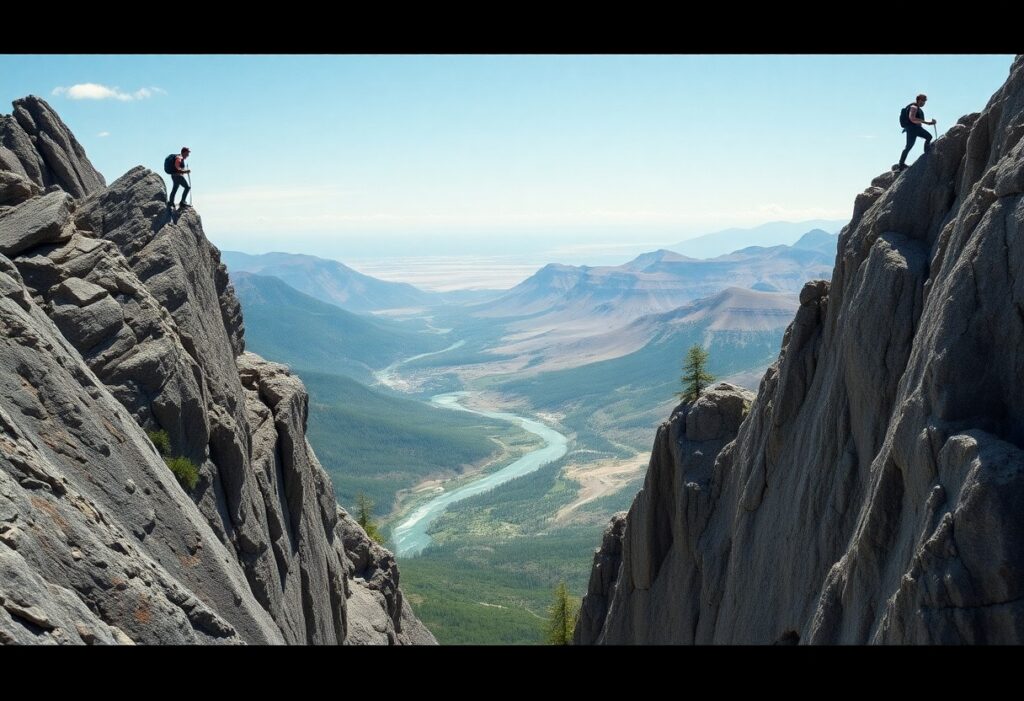
The inquiry into adventure teen travel destinations in the USA is frequently obscured by the “all-encompassing” fallacy. Parents and educators often search for a singular “best” location. Oversimplification remains the greatest risk in this search. Many commercial providers market “adventure” as a series of adrenaline-inducing activities, such as white-water rafting, rock climbing, or zip-lining. Often, they fail to integrate these into a cohesive educational narrative. To distinguish a high-value program from a glorified adrenaline tour, one must evaluate “reflective integration.” Are there structured, facilitated debriefs? Do participants connect physical challenges to themes of personal growth, teamwork, or environmental stewardship? Without this reflection, the adventure remains mere sensory stimulation. It loses its potential to serve as a lasting developmental catalyst.
Historical and Systemic Evolution of Youth Mobility
Organized youth travel has shifted since the mid-20th century. Earlier custodial models aimed primarily to keep youth occupied in supervised, static environments. Today, we have moved toward “high-impact” models. Historically, programs were disjointed. They focused on regional “camp” experiences that rarely bridged the gap between vacation and genuine skill acquisition.
Current landscapes are defined by “impact-driven” travel. Providers now face increased scrutiny regarding their outcomes. The industry has adopted rigorous standards for safety, risk management, and instructor certification. These standards mirror the professionalization of the wilderness education sector. However, this shift has also introduced a layer of “credentialism.” This can distract from the inherent, messy benefits of true exploration.
Conceptual Frameworks for Program Evaluation
-
The Agency-Scaffold Paradox: Evaluate whether a program provides enough physical and psychological safety (the scaffold). Simultaneously, determine if it demands that students make autonomous, difficult decisions (the agency).
-
The Pedagogical-Objective Matrix: Match the participant’s growth goal, such as leadership, technical aptitude, or empathy, to the program’s specific daily operational focus.
-
The Instructor-to-Guide Ratio: Distinguish between programs employing professional educators or wilderness-certified instructors and those relying on seasonal staff whose primary skill is logistical facilitation.
-
The Progressive-Difficulty Model: Assess whether the program’s physical and mental challenges increase incrementally. This allows students to build competency rather than being overwhelmed from the outset.
Key Categories and Operational Variations
| Category | Typical Pedagogical Focus | Primary Risk Factor |
| Wilderness Expeditions | Resilience, Self-Reliance | Physical/Environmental Hazards |
| Service-Learning | Civic/Leadership Development | Superficiality/Community Disconnect |
| Academic/Field-Study | Intellectual/Vocational Focus | Cognitive Burnout/Social Isolation |
| Cultural Immersion | Social Fluency, Perspective | Cultural Friction/Misunderstanding |
Decision logic for selecting a destination should be driven by the participant’s current “learning edge”—the gap between what they can currently handle and what they are capable of achieving with appropriate, scaffolded support.
Real-World Scenario Modeling
Scenario 1: The “High-Density” Burnout
A teen is enrolled in a multi-state tour that crams three national parks into five days. By day four, the teen is physically and mentally exhausted, rendering them incapable of engaging with the final, most “iconic” site.
-
Decision Point: Require a “recovery-to-activity” ratio of at least 1:3, ensuring downtime for integration.
-
Failure Mode: Confusing the quantity of sites visited with the quality of the experience.
Scenario 2: The Infrastructure Failure
A remote-based trekking group relies on a single digital device for navigation. A battery failure or signal loss leaves the group without a clear path.
-
Decision Point: Demand an “analog-redundant” protocol where leaders carry physical maps, compasses, and hard-copy emergency procedures.
-
Second-Order Effect: When teens observe instructors using analog tools, it signals that the environment dictates the rules, not the technology.
Planning, Cost, and Resource Dynamics
The economic management of adolescent travel involves weighing high-end amenities against developmental infrastructure. True value in adventure programs is often hidden in the “back-end” of the operation—the caliber of the staff and the rigor of the safety protocols—rather than the comfort of the lodging.
| Investment Focus | Low-Value Indicator | High-Value Indicator |
| Staffing | Seasonal/Low Training | Wilderness First Responder (WFR) / Youth Development |
| Logistics | Aggregator-based sourcing | Direct-vetted partners and operations |
| Itinerary | Back-to-back sightseeing | Balanced/Reflective downtime |
Operational Tools and Support Systems
-
The “Safety-Bridge” Protocol: Verifying that the organization has a dedicated Medical Director and a verified emergency response activation time (often under 10 minutes).
-
Incident Transparency Records: Assessing whether the provider publishes their own incident tracking (e.g., minor injuries vs. serious events) rather than hiding behind marketing optics.
-
Local-Stakeholder Integration: Ensuring that trips in fragile ecosystems (like the Grand Canyon or coastal Hawaii) are managed in partnership with local environmental experts.
-
Analog Contingency Plans: Confirming that the group does not rely exclusively on digital systems that are prone to failure in remote U.S. regions.
The Risk Landscape: Failure Modes and Compounding Risks
The most significant risk is the “Normalization of Friction.” Minor, repeated logistical delays (e.g., poor meal planning or inconsistent transportation) may seem insignificant in isolation. However, these small frictions erode the morale of the group, leaving participants with a weakened capacity to cope with larger, unexpected crises. Programs that fail to implement a formal “After-Action Review” process are structurally prone to these compounding failures.
Governance, Maintenance, and Long-Term Adaptation
A robust organization must demonstrate a commitment to iterative improvement through a formal review cycle. Feedback from participants and staff must be mapped against the itinerary to identify “systemic bottlenecks.” An adventure program should ideally refine its protocols annually, responding to changes in environmental conditions, staffing retention rates, and historical incident logs.
Measurement, Tracking, and Evaluation
-
Leading Indicators: Staff tenure and retention; the specific, documented credentials of instructors (e.g., WFR, CPR, educational degrees).
-
Lagging Indicators: The frequency and severity of “near-miss” incidents reported post-program.
-
Qualitative Signals: Long-term follow-up; do participants continue to engage in the field they explored? (e.g., service, outdoor stewardship, or continued study).
-
Documentation: Requesting an “Emergency Response Overview” or a redacted summary of past incident logs as a litmus test for institutional honesty.
Common Misconceptions and Oversimplifications
-
Myth: “High prices equal high educational quality.”
-
Correction: High prices often correlate with luxury accommodation, not high-end educational engagement or safety rigor.
-
Myth: “A ‘packed’ schedule is a ‘productive’ schedule.”
-
Correction: Sensory overload inhibits curiosity; downtime is a required pedagogical tool for memory and integration.
-
Myth: “Technology (GPS, apps) ensures safety.”
-
Correction: Technology is a supplement, not a foundation; it can mask a lack of deep, operational planning.
-
Myth: “Group dynamics can be fixed on the fly.”
-
Correction: Group dynamics are a byproduct of the program’s structure; if the structure is poor, the dynamics will be poor.
Ethical and Contextual Considerations
The duty of care for youth in the outdoors is paramount. Programs operating in sensitive environments must move beyond “leave no trace” to adopt an ethos of “stewardship,” ensuring that their presence actively benefits the region through volunteerism or ecological education. The most ethical programs recognize their role as guests and prioritize the needs of the host environment over the convenience of the traveler.
Conclusion
Identifying the ideal adventure travel experience requires a shift from passive consumption to intentional selection. By focusing on programs that value student agency, pedagogical expertise, and operational transparency, one can turn the vast geography of the United States into a dynamic classroom for adolescent development. This is not about selecting a “perfect” trip, but about choosing a structure that provides the necessary support for a teen to encounter, struggle with, and eventually master the realities of the wider world. True travel authority is found in the ability to discern the difference between a trip that is simply “exciting” and one that leaves a permanent, positive mark on the participant’s character.