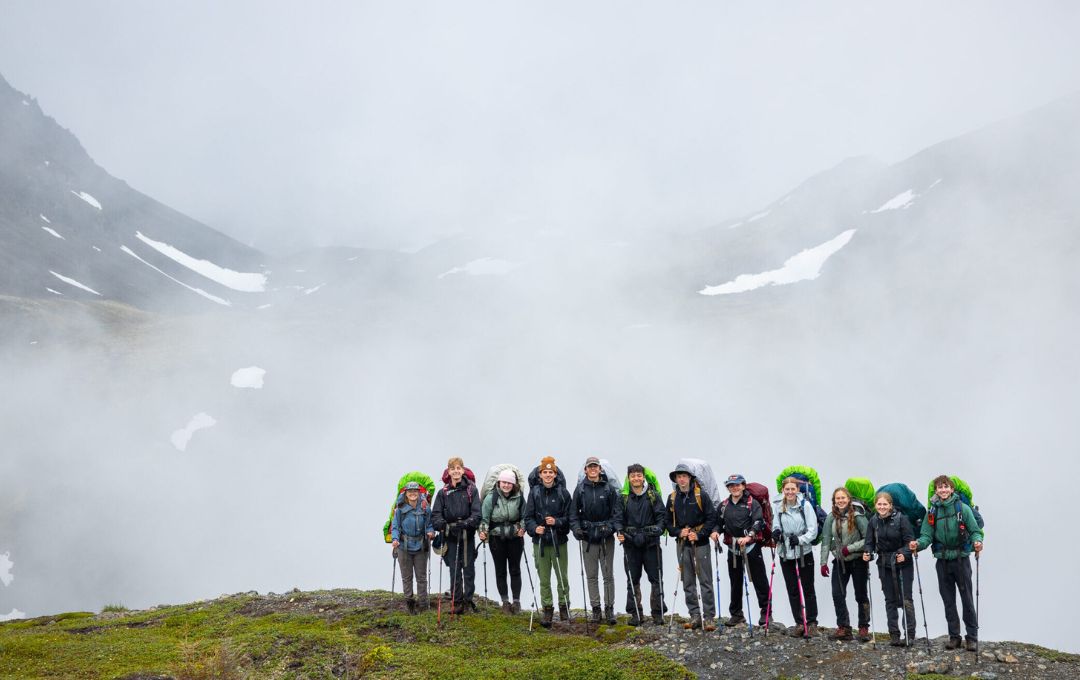
Compare Teen Travel Plans: A Definitive Guide for Strategic Growth
The selection of a structured youth travel experience is no longer a matter of choosing a destination or a price point. It has evolved into a strategic architectural project. Parents and educators must now account for a vast ecosystem of variables ranging from risk management protocols and pedagogical alignment to the subtle nuances of group dynamics that define whether a trip serves as a transformative milestone or merely a costly, ephemeral diversion.
The contemporary market for youth travel is crowded with providers ranging from global conglomerates to boutique, specialist outfits. Navigating this landscape effectively requires a methodology that moves beyond brochures and marketing claims to interrogate the actual operational reality of a program. To understand what is truly offered, stakeholders must look past the “tour” and examine the underlying infrastructure of oversight, the depth of local relationships, and the intentionality of the curriculum.
This document serves as a comprehensive reference for those tasked with the due diligence required to select the right environment for adolescent growth. By establishing a rigorous framework for assessment, it provides the tools to move from speculative planning to evidence-based decision-making. The goal is not merely to select a program, but to engineer an experience that aligns with the specific developmental trajectory of the individual, ensuring safety, growth, and long-term value.
Understanding “compare teen travel plans.”

When stakeholders begin to compare teen travel plans, they often fall into the trap of analyzing amenities rather than systems. An attractive itinerary, complete with high-prestige locations and comfortable accommodations, is often cited as the primary indicator of quality. However, this is a dangerous oversimplification. A high-end logistical itinerary can coexist with a poorly managed group, inadequate safety protocols, or an intellectually vapid curriculum. The true work of comparison lies in stripping away the veneer of the destination to expose the pedagogical backbone of the program.
A common misunderstanding is the assumption that safety is a binary metric. In reality, it is a spectrum influenced by staff training, vendor vetting, and emergency response capabilities. Those who fail to look deeply into these systems risk choosing a program based on its “curated look” rather than its operational integrity. To compare teen travel plans accurately, one must assess the “instructional density,” a measurement of how much the program forces the teen to actively navigate their environment versus the level of passive “guided observation” they receive. This is the difference between a trip that happens to the teen and a trip that the teen must facilitate with guidance.
Historical and Systemic Evolution of Youth Travel
The history of organized youth travel is a mirror of the changing expectations of the adolescent experience. In the post-war era, the industry was bifurcated: academic-focused study abroad programs for the elite and volunteer-based service trips for the socially conscious. These were relatively decentralized and lacked the rigorous oversight found in modern institutional environments.
By the late 1990s, the professionalization of the sector began in earnest. Increasing litigation, a greater focus on child safety, and the democratization of global travel forced providers to adopt corporate-grade risk management. By 2026, we will occupy an era defined by “data-informed growth.” The industry now tracks adolescent development through structured feedback loops, aiming to replicate the successes of high-performance executive coaching in a format accessible to youth. The evolution has moved from “exposure” to “intentional transformation,” where every aspect of the travel, from transit to social interaction, is designed to elicit specific behavioral responses.
Conceptual Frameworks for Assessment
-
The Pedagogical Alignment Model: Does the program’s stated philosophy (e.g., experiential learning, leadership, service) map directly to the day-to-day activities? If a program claims to foster leadership but manages every micro-decision for the participant, the philosophy is purely decorative.
-
The Safety-Integrity Index: Assess the program’s response to the “unforeseen.” Look for detailed documentation on staff certifications, medical response times, and vendor verification. A high-performing program publishes its safety metrics; a weak one relies on generic marketing slogans.
-
The Complexity vs. Support Ratio: Every teen has a different tolerance for challenge. Evaluate whether the program provides “scaffolding,” the necessary support to keep a teen in a productive learning zone, or whether it either leaves them unsupported (overwhelmed) or over-managed (stunted).
-
The Local Integration Metric: Determine whether the program interacts with the local community through authentic partnerships or through superficial, transactional arrangements. Authentic integration provides a deeper cultural context and superior safety/local intelligence.
Key Categories and Operational Variations
| Category | Typical Utility | Strategic Focus | Primary Limitation |
| Language Immersion | Linguistic & Cultural | Cognitive Flexibility | Requires high base maturity |
| Service/Stewardship | Altruism & Perspective | Character Development | Risk of performative service |
| Outdoor Expedition | Physical/Mental Grit | Resilience & Focus | High safety/physical load |
| Academic/Field-Study | Intellectual Extension | Subject Mastery | Can replicate school fatigue |
| Leadership/Adventure | Soft-Skill Acquisition | Team Dynamics | High interpersonal stress |
Decision logic requires an honest audit of the teen’s developmental needs. When you compare teen travel plans, rank them by their ability to close a specific developmental gap, such as a lack of confidence, a need for cultural exposure, or a deficiency in independent problem-solving, rather than by the popularity of the destination.
Real-World Scenario Modeling
Scenario 1: The High-Achieving, Risk-Averse Student
A teen excels in structured academic environments but lacks the ability to navigate unstructured, ambiguous situations.
-
Decision Point: Prioritize outdoor expedition or field-study programs that require them to manage logistical ambiguity.
-
Failure Mode: Selecting a tour that manages every minute of the day. This reinforces the student’s need for external structure and prevents them from developing the muscles of independence.
Scenario 2: The Socially Disengaged/Digital-Native
A teen struggles with focus and demonstrates an over-reliance on digital connectivity.
-
Decision Point: Mandatory digital-detox programs that facilitate heavy group interaction and analog challenges.
-
Second-Order Effect: Expect resistance during the “withdrawal” phase. The measure of program success is how they manage this discomfort, not how much the participant enjoys the first few days.
Planning, Cost, and Resource Dynamics
| Investment Tier | Typical Focus | Resource Intensity |
| Essential Facilitation | Logistical access/safety | Moderate |
| Integrated Management | Strategy, continuity, and growth | High |
| Institutional Office | Full-cycle mentorship/security | Very High |
When you compare teen travel plans, factor in the “shadow costs”: the cost of specialized equipment, international insurance, vaccinations, and the opportunity cost of the time diverted from other academic pursuits. A lower sticker price often reflects a lower investment in staff-to-student ratios, which is a critical safety and pedagogical indicator.
Operational Tools and Support Systems
-
Vetted Vendor Ledgers: A high-quality provider has a documented history with their ground partners. Ask to see a sample of how they vet local transportation and lodging providers.
-
Encrypted Data Vaults: Ensure that the provider handles medical and personal information with enterprise-level security.
-
Reflective Journaling Frameworks: Programs that mandate structured daily reflection provide more value than those that simply fill the schedule with activities.
-
Redundant Communication Protocols: Understand how the program maintains contact in regions with poor connectivity. The best plans have layered systems (e.g., satellite, local landlines) for emergencies.
The Risk Landscape: Failure Modes and Compounding Risks
The most significant risk is “intermediary bloat” when a marketing-heavy agency sells a trip that is actually operated by a low-cost, local subcontractor. This creates an accountability gap. “Supervisory dilution,” where staff are responsible for too many students, is the most common cause of safety lapses. Furthermore, the “privacy drift,” the slow erosion of information security during long-term programs, must be checked through rigorous audits of how the firm handles student data.
Governance, Maintenance, and Long-Term Adaptation
Treat the program selection as a recurring business project. If the teen is scheduled for multiple summers of travel, use a “programmatic audit” to compare performance year over year. If a provider fails to meet a safety or educational benchmark, replace them. The most successful families maintain a personal “travel archive”—a documentation of each experience, its strengths, weaknesses, and the measurable growth observed in the teen—to inform future decisions.
Measurement, Tracking, and Evaluation
-
Leading Indicators: The precision of pre-departure checklists; the level of transparency regarding leader training.
-
Lagging Indicators: Longitudinal growth in maturity, autonomy, and problem-solving.
-
Qualitative Signals: The “invisible hand” test—a successful program should foster growth in the teen’s ability to navigate the world without the facilitator needing to be visibly “parenting” them.
-
Documentation: Maintain a portfolio of the teen’s work—essays, project reports, and leadership debriefs. These are invaluable for later university applications or internships.
Common Misconceptions and Oversimplifications
-
Myth: “All structured travel is educational.”
-
Correction: Without reflective practice and specific goals, travel is just movement.
-
Myth: “You can assess a program via website photos.”
-
Correction: Photos are marketing; they do not reveal safety protocols or leader qualifications.
-
Myth: “An older teen doesn’t need supervision.”
-
Correction: An older teen needs different supervision; removing it entirely is not autonomy—it is a lack of accountability.
-
Myth: “More expensive equals safer.”
-
Correction: Higher costs can fund luxury; safety is funded by rigorous training and redundant systems.
Ethical and Contextual Considerations
The ethics of travel require that the adolescent acts as a guest, not a consumer. Programs must be scrutinized for their impact on local communities. Avoid “voluntourism” that treats local poverty or environmental issues as a backdrop for a student’s personal development. Ensure the provider emphasizes the student’s responsibility to understand and respect local customs and laws, which is not only an ethical requirement but also a primary safety factor in international travel.
Conclusion
The decision to compare teen travel plans is an exercise in discerning true substance from marketing noise. Success in this domain is not measured by the destination or the comfort of the accommodations, but by the measurable increase in a teenager’s ability to navigate the world with competence and purpose. By applying a systematic, audit-based approach to the selection process, families can shift from reactive planning to proactive design and engineering experiences that catalyze long-term growth and resilience. True mastery in this area requires the patience to look beyond the surface and the discipline to prioritize operational integrity over ephemeral prestige, ensuring that the adolescent returns not just with photos, but with a refined and strengthened sense of self.