Top Youth Travel in America: A Guide for Strategic Selection
The architecture of a formative travel experience is rarely found in the prominence of the destination, but rather in the degree of friction it introduces to a young person’s life. When we speak of the most effective programs, we are discussing environments that demand more than passive observation. The highest-quality journeys serve as pedagogical scaffolds, designed to push adolescents toward self-reliance while maintaining a robust, often invisible, layer of systemic safety. This balance between the necessity of challenge and the requirement for security is the defining feature of what we might consider the gold standard in the field.
In an era where travel has been largely commodified into a series of visual checklists, the true value of an excursion lies in its capacity to reorganize a participant’s worldview. For the adolescent, who exists in a state of neurobiological plasticity, a well-structured trip acts as a crucible for autonomy. It forces a departure from the curated, parent-mediated routines of daily life and introduces the requirement of real-time problem solving. Whether through the lens of community service, environmental fieldwork, or language immersion, the objective is consistent: to transition the student from a dependent observer to an active agent in their own environment.
This article examines the structural elements that define excellence in this sector. It is not a catalogue of popular destinations or high-end tour providers, but rather a dissection of the principles that make a program “top-tier” by objective, developmental standards. For guardians, educators, and organizers, the task is to look past the marketing narratives and evaluate the underlying operational integrity of a program its risk management, its staff-to-student ratios, its local partnerships, and its pedagogical clarity. The following guide provides the framework necessary to navigate this complex landscape with intellectual rigor.
Understanding “top youth travel in America.”
To arrive at a meaningful definition of top youth travel in America, one must strip away the veneer of convenience and high-end marketing. A common misunderstanding is that quality is synonymous with cost or activity volume. In reality, the “top” programs are defined by their structural reliability and their pedagogical focus. Many programs suffer from an “activity-density bias,” where the itinerary is so crammed with events that it leaves zero time for the cognitive processing required for actual learning. This is an oversimplification of the travel experience that favors superficial engagement over developmental growth.
The risk of this oversimplification is profound: it leads to programs that provide a “tourist” experience, efficient, comfortable, and ultimately forgettable, rather than an “expedition” experience. A truly effective program acknowledges that adolescent development is not linear; it is a messy, sometimes frustrating process of trial and error. The programs that hold the most value are those that build in the space for these errors to occur safely. Understanding what makes a program “top” requires looking at the instructor’s role: are they a manager of logistics, or a facilitator of growth? The latter is a significantly higher bar, and it is the primary differentiator in the competitive landscape of youth mobility.
Historical and Systemic Evolution of Youth Mobility
The evolution of youth-focused travel is largely a story of shifting from custodial to developmental priorities. In the mid-20th century, the model was primarily one of supervision: keeping youth physically safe and occupied during the summer months. As the global economy became more interconnected, the impetus shifted toward “global citizenship” and cultural competency. This led to a boom in international study abroad and service-learning programs, which have now been bolstered by a refined, data-driven approach to risk management.
Today, we see a hybridization of these models. The most sophisticated providers have moved toward “place-based learning,” where the location is not just a backdrop but an essential text for the curriculum. Simultaneously, the U.S. domestic market has seen a resurgence in regional exploration, driven by economic pressures and a growing interest in the “rediscovery” of local environments. The challenge for 2026 and beyond is maintaining this pedagogical focus while navigating a period of economic inflation and shifting geopolitical stability, which are forcing providers to prioritize resource efficiency over luxury consumption.
Conceptual Frameworks for Program Evaluation
-
The Agency-Scaffold Paradox: The degree to which a program provides safety (the scaffold) without removing the necessity of independent choice (the agency).
-
The Pedagogical-Objective Matrix: Matching the specific developmental goal (e.g., leadership, technical skill, social maturity) against the program’s day-to-day operations.
-
The Instructor-to-Guide Ratio: Distinguishing between programs that utilize professional educators trained in behavioral management versus those that rely on seasonal guides focused solely on logistical efficiency.
-
The Progressive-Difficulty Model: An assessment of whether the trip’s demands increase incrementally, allowing the student to build competency rather than being overwhelmed by a “peak-intensity” schedule from day one.
Key Categories and Operational Variations
| Program Category | Primary Developmental Focus | Core Risk Factor |
| Wilderness Expeditions | Resilience & Physical Competence | Environmental hazards & isolation |
| Academic/Pre-College | Intellectual & Vocational Focus | Cognitive burnout & social exclusion |
| Service-Learning | Civic/Leadership Development | Superficiality & donor-dependency |
| Cultural Immersion | Social Fluency & Perspective | Cultural friction & shallow engagement |
Evaluation must move beyond these categories. For example, a “service” trip is only as good as the partnership between the provider and the local community. If the program is not community-sourced, it risks being a performative exercise that creates more dependency than it resolves.
Real-World Scenario Modeling
Scenario 1: The “High-Performance” Burnout
A high-achieving student enters a rigorous academic tour. The schedule is back-to-back lectures and museum visits. By day four, the student is disengaged and irritable.
-
Decision Point: Does the program have built-in “recovery blocks”?
-
Failure Mode: Confusing activity with learning. The second-order effect is a lost opportunity for reflection, turning a “top” program into a high-cost, low-yield experience.
Scenario 2: The Infrastructure Failure
The group relies on a single shared digital platform for coordination, which goes down due to connectivity issues in a remote region.
-
Decision Point: Does the group have an analog, paper-based backup for every critical logistical element?
-
Failure Mode: Technological reliance as a substitute for operational competence.
Planning, Cost, and Resource Dynamics

The economic management of these programs often hides the true cost of quality. A high price tag does not always reflect high-quality staffing or safety redundancies.
| Expenditure Type | High-Quality Indicator | Low-Quality/Marketing Fluff |
| Staffing | Professional educators, high retention | Seasonal, low-training turnover |
| Logistics | Redundant systems & vetted partners | Aggregator-based, “just-in-time” |
| Itinerary | Paced, with reflective downtime | Packed, “greatest-hits” density |
Operational Tools and Support Systems
-
The “After-Action” Review: A standard protocol where leaders document near-misses and logistical bottlenecks, and this data is used to adjust the next season’s itinerary.
-
Redundancy Protocols: Physical copies of itineraries, contact lists, and medical histories for every member of the group.
-
Local “Fixer” Integration: Established, long-term relationships with local experts who provide genuine insight rather than tourist-standard scripts.
-
Graduated Autonomy: Designing the trip so that the degree of structure decreases as the group’s competency and cohesion increase.
The Risk Landscape: Failure Modes and Compounding Risks
Risk is rarely a singular event; it is a chain. A student’s failure to eat (biological) leads to irritability (emotional), which causes conflict (social), which results in a safety violation (logistical). The taxonomy of risk management must be proactive. “Compounding risk” occurs when an organization ignores minor failures, viewing them as inevitable costs of travel rather than warning signs of a larger, systemic weakness.
Governance, Maintenance, and Long-Term Adaptation
Programs that are resilient are those that treat their operating procedures as living documents. Governance cycles should include annual audits of safety training (CPR/Wilderness First Responder) and vendor vetting. If a vendor—whether an airline or a homestay partner—consistently fails to meet the threshold of safety or pedagogical value, the program must be willing to sever that relationship, regardless of its popularity.
Measurement, Tracking, and Evaluation
-
Leading Indicators: The frequency and duration of “unscripted” vs. “scripted” moments. A higher ratio of scripted moments is often a negative indicator of student autonomy.
-
Lagging Indicators: Participant incident logs; high rates of medical or behavioral incidents are a clear signal of poor supervision ratios or improper risk assessment.
-
Qualitative Signals: Alumni engagement. Do students maintain the skills or relationships they gained during the program?
-
Documentation: Reviewing redacted incident reports or safety-policy summaries provided by the organization during the vetting process.
Common Misconceptions and Oversimplifications
-
Myth: “Technology (GPS, apps) ensures safety.”
-
Correction: Technology is a supplement, not a foundation. It often obscures a lack of deep, local operational planning.
-
Myth: “You can train students to be ‘safe’ via pre-departure packets.”
-
Correction: Safety is behavioral; it is taught through environment-based coaching, not reading.
-
Myth: “The most famous site is the most educational.”
-
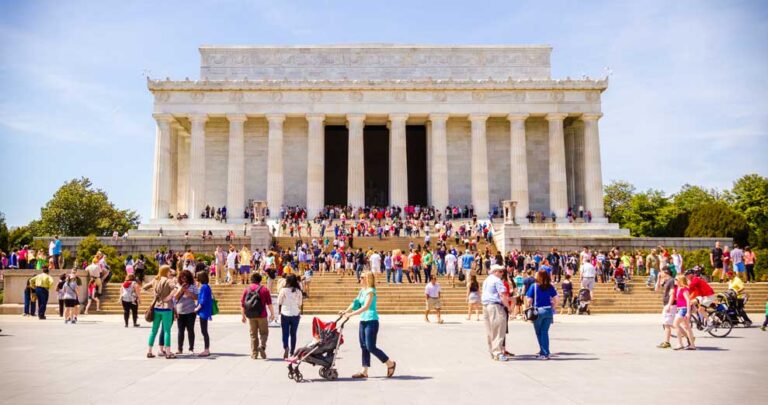
Correction: Famous sites are often crowded, low-engagement environments that are the most difficult to teach from effectively.
-
Myth: “Student travel is an individual adventure.”
-
Correction: Student travel is a collaborative, mission-based operation; individual behavior has group-wide consequences.
Ethical and Contextual Considerations
The ethics of student mobility require a deep respect for host communities. It is no longer enough to be a “good guest.” Programs must ensure that their presence has a net-positive impact. This means compensating local experts, utilizing locally-owned transport and accommodation, and most importantly, ensuring that service projects are community-led, not provider-imposed.
Conclusion
The pursuit of the most effective travel experiences requires a shift from passive, consumer-driven choices toward active, mission-based selection. When we speak of the best programs, we are discussing entities that prioritize the participant’s growth above the brand’s aesthetic. A truly successful journey leaves the student with more than just a collection of memories; it provides them with a set of tools situational awareness, social adaptability, and the capacity for self-regulation that will serve them long after they return home. By demanding structural integrity, pedagogical depth, and operational honesty, those who guide our youth can ensure that their time on the road is transformative, resilient, and enduring.