Best Teen Travel in the US: A Strategic Guide for Families
The pursuit of high-impact travel for adolescents requires a shift in perspective: moving away from the “tourist” mindset, where the traveler is a passive consumer of sights, toward an “experiential” framework in which the teen is an active participant in an environment that demands accountability, problem-solving, and adaptability. In the United States, this potential is vast, yet it is frequently obscured by marketing-heavy programs that emphasize superficial activity density over genuine growth. A truly developmental experience is defined not by the number of monuments checked off a list, but by the extent to which the environment forces the participant to exercise agency and navigate novel challenges.
For many, the transition from structured, parent-mediated childhood experiences to self-directed exploration is a jarring process. The “best” travel, therefore, is not the most expensive or the most exotic, but the one that provides the appropriate degree of “scaffolded autonomy.” In this model, the program provides the safety and logistical infrastructure necessary to minimize the risk of catastrophic failure while maximizing the teen’s capacity to make meaningful, autonomous decisions within a structured context.
This article provides a rigorous framework for evaluating and selecting programs that offer substantive developmental value. It is intended to serve as a definitive resource for guardians and educators, moving past the common platitudes of travel brochures to examine the systemic requirements of a transformative journey. By identifying the architectural elements of effective youth travel, we can ensure that time spent on the road translates into lasting gains in resilience, perspective, and social capability.
Understanding “best teen travel in the US.”

The search for the best teen travel in the US is often hampered by the “all-encompassing” fallacy. Potential travelers and their guardians frequently look for a singular “best” program, ignoring the reality that the “best” experience is entirely contingent upon the specific developmental needs of the teen in question. What constitutes a transformative experience for a socially reserved student interested in environmental biology will differ drastically from the needs of an outgoing teen seeking leadership challenges in a public policy context.
Oversimplification poses the most significant risk here. Many commercial programs market themselves as “life-changing,” yet offer nothing more than a superficial sightseeing tour wrapped in a veneer of institutional authority. To determine what is truly “best,” one must look past the destination. Are the participants being taught to navigate their environment, or are they being herded through it? Is the instructor a true educator who fosters independence, or a tour guide who manages convenience? Recognizing this distinction is the first step toward identifying programs that provide genuine value.
Historical and Systemic Evolution of Youth Mobility
Organized youth travel in the United States has evolved from the mid-20th-century model of “summer camp-on-wheels” characterized by high supervision and rigid, group-centric schedules to the modern era of hyper-specialized, mission-driven programs. Historically, the goal was largely custodial: keeping youth occupied in a safe environment.
Current systemic shifts, however, emphasize “impact-driven” travel. Institutions and parents now prioritize programs that offer tangible outcomes, such as service-learning hours, pre-college academic credit, or documented leadership development. While this shift toward professionalization has increased the quality of risk management and educational content, it has also introduced a layer of “credentialism” that can sometimes distract from the raw, unpredictable benefits of simple exploration.
Conceptual Frameworks for Program Selection
-
The Agency-Scaffold Paradox: A framework for evaluating whether a program provides enough safety (the scaffold) while still requiring the student to make autonomous decisions (the agency).
-
The Pedagogical-Objective Matrix: Matching the teen’s specific growth goal (e.g., leadership, technical skill, social expansion) to the program’s actual operational focus.
-
The Instructor-to-Guide Ratio: Distinguishing programs that employ professional educators or wilderness instructors from those that rely on seasonal guides whose primary goal is logistical efficiency.
-
The Progressive-Difficulty Model: A way to assess whether the program’s challenges increase over time, rather than remaining static or peaking too early.
Key Categories and Operational Variations
| Program Category | Primary Objective | Ideal Participant Profile |
| Wilderness Expeditions | Resilience & Technical Skills | Teens needing challenge & digital detox |
| Academic/Pre-College | Intellectual/Vocational Focus | Future-oriented, career-motivated |
| Service-Learning | Civic/Leadership Development | Socially conscious, action-oriented |
| Cultural Immersion | Social Fluency & Perspective | Socially curious, adaptable |
Realistic decision logic dictates that when evaluating these categories, one must look for programs that blend these elements. The most robust experiences often pair high-intensity physical challenge with a component of civic or intellectual work.
Real-World Scenario Modeling
Scenario 1: The “Resume-Builder” Mismatch
A teen is placed in a prestigious service-learning program to bolster a college application, but lacks the emotional maturity to handle the rigors of community immersion.
-
Decision Point: Aligning the program choice with the student’s readiness rather than just their ambition.
-
Failure Mode: The student becomes disengaged, resulting in a negative experience for both the teen and the host community.
Scenario 2: The “Over-Structured” Trap
A student seeking independence is enrolled in a program that manages every 15-minute block of the day, effectively stifling their ability to practice self-regulation.
-
Decision Point: Prioritize “unstructured” or “low-structure” windows within the program’s itinerary that allow for spontaneous exploration under supervision.
-
Second-Order Effect: When teens have to manage their own time for even one hour, the resulting lessons in boredom, decision-making, and self-reflection are often more valuable than a day of guided tours.
Planning, Cost, and Resource Dynamics
The economic management of these programs involves weighing direct costs against the potential for high-impact growth. It is essential to distinguish between the cost of “amenities” (deluxe hotels, catered food) and the cost of “value-added infrastructure” (trained staff, safety redundancies, expert instructors).
| Resource Type | Investment Focus | Performance Metric |
| Professional Staffing | High-Quality, Tenured Mentors | Incident avoidance & student growth |
| Risk Infrastructure | Vetted Communication/Emergency Plans | Operational resilience |
| Activity Density | Selective, High-Engagement Events | Depth of learning vs. volume of sights |
Operational Tools and Support Systems
-
Direct-Vetting Procedures: Contacting past participants and, if possible, staff members to gain an unvarnished view of the program’s operational realities.
-
The “Safety-Bridge” Protocol: Ensuring that the program has a clear, redundant line of communication for emergency escalation.
-
Local-Partner Integration: Verifying that programs in specific regions have strong, long-term relationships with local community stakeholders, rather than operating as external “tourists.”
-
Analog Contingency Plans: Confirming that the group does not rely exclusively on digital systems that can fail in remote or rural U.S. environments.
The Risk Landscape: Failure Modes and Compounding Risks
The most significant risk is the “Assumption of Safety”—believing that an expensive, well-branded program is immune to failure. Compounding this is the “Normalization of Friction,” where recurring, minor logistical delays or staff turnover issues are ignored until they culminate in a larger incident. Programs that lack an institutional “After-Action Review” process are inherently more prone to these compounding failures.
Governance, Maintenance, and Long-Term Adaptation
A successful organization must demonstrate a commitment to iterative improvement. This requires a formal “Review Cycle” where the feedback from participants is not just gathered but acted upon. A provider that has been running programs for a decade should have documented proof of how their curriculum or safety protocols have evolved in response to changing environmental and social conditions.
Measurement, Tracking, and Evaluation
-
Leading Indicators: Staff tenure and retention; the specific, documented credentials of instructors.
-
Lagging Indicators: The frequency and nature of “near-miss” incidents reported post-program.
-
Qualitative Signals: Long-term follow-ups with alumni; does the teen continue to engage in the field they explored (e.g., continued service, further study)?
-
Documentation: Requesting an “Emergency Response Overview” or a redacted copy of a recent incident-log summary from the provider.
Common Misconceptions and Oversimplifications
-
Myth: “The most famous landmark is the best classroom.”
-
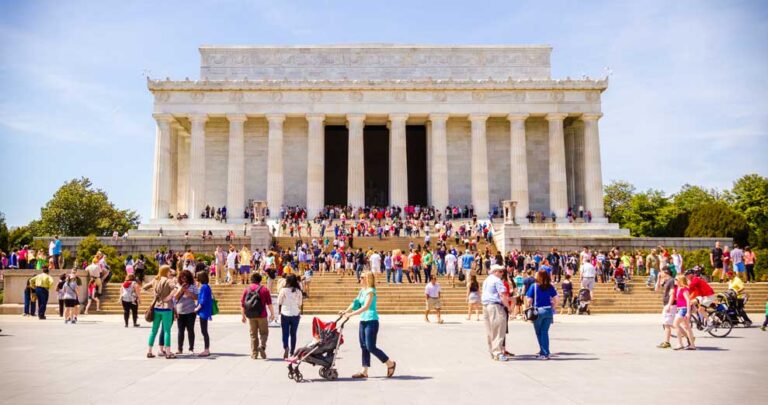
Correction: Famous sites are often high-friction, crowded, and distracting; learning often happens best in less “spectacular” environments.
-
Myth: “High prices mean high educational quality.”
-
Correction: High prices often correlate with high-end accommodation, not high-end educational engagement.
-
Myth: “A ‘packed’ schedule is a ‘productive’ schedule.”
-
Correction: Sensory overload kills curiosity; downtime is a required pedagogical tool.
-
Myth: “One program fits all.”
-
Correction: Programs must be selected based on the teen’s specific developmental trajectory and maturity level.
Ethical and Contextual Considerations
Youth travel entails a significant duty of care. Programs that enter communities as “service providers” must demonstrate a commitment to “do no harm,” ensuring that their projects benefit the community rather than just serving as a “photo opportunity” for the participants. Ethical travel is, at its heart, about humility, recognizing that the traveler is a guest who is there to learn, not a temporary savior.
Conclusion
Identifying the ideal travel experience requires a shift from passive consumption to active, intentional selection. By focusing on programs that value student agency, pedagogical expertise, and operational transparency, one can turn the vast geography of the United States into a dynamic classroom for adolescent development. This is not about selecting a “perfect” trip, but about choosing a structure that provides the necessary support for a teen to encounter, struggle with, and eventually master the realities of the wider world. True travel authority is found in the ability to discern the difference between a trip that is simply “fun” and one that leaves a permanent, positive mark on the participant’s character.