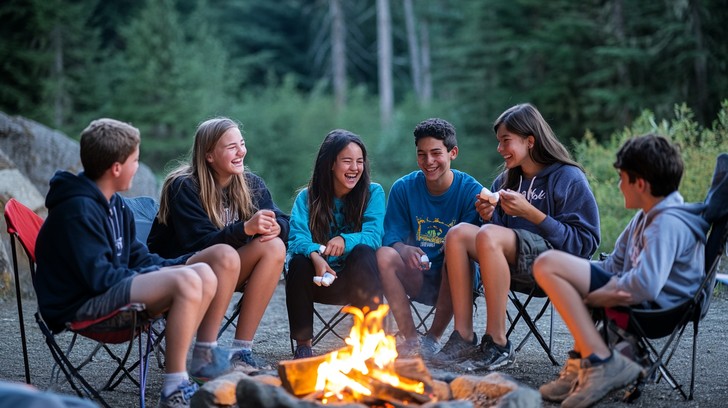
Top Teen Camps in America: A Strategic Evaluation Guide
The architecture of a transformative youth experience is rarely defined by the prestige of a campus or the variety of its facilities. Instead, the true efficacy of a program lies in its capacity to construct a social and physical environment that demands adolescent engagement, self-regulation, and collaborative problem-solving. When we evaluate the landscape of summer programming, we are not searching for the most luxurious amenities. We are looking for the structural integrity of the program, the ability to scaffold challenge in a way that allows participants to experience both autonomy and accountability within a safe, intentional setting.
The current market for youth programming is often saturated with hyper-specialized options that emphasize skill mastery over broader character development. While technical proficiency in robotics, athletics, or marine biology is a valuable outcome, the primary developmental imperative of an immersive experience remains the expansion of the participant’s social and psychological horizons. A program that achieves this successfully does so by removing the student from the curated, parent-mediated routines of their daily life and placing them into a social microcosm where they must navigate novel conflicts and contribute to the collective functioning of their peer group.
Selecting a program is a high-stakes logistical decision. For guardians and educators, navigating this field requires a diagnostic approach. It necessitates moving beyond promotional materials to evaluate the provider’s operational history, staff retention rates, crisis-management protocols, and pedagogical philosophy. This analysis provides a definitive framework for understanding the criteria that separate high-impact, mission-driven programs from those that offer little more than temporary custodial care.
Understanding “top teen camps in America.”

The pursuit of the top teen camps in America is frequently hampered by the “all-encompassing” fallacy, where planners attempt to identify a singular, universal gold standard. This approach is inherently flawed. The quality of a program is entirely contingent upon the developmental readiness of the adolescent and the specific mission of the family or organization. What constitutes a life-changing experience for a socially reserved teenager seeking technical mastery in an academic setting will be entirely ineffective for a high-energy child seeking the social friction and physical demands of a wilderness-based, small-group model.
Oversimplification poses the most significant risk in this selection process. Many commercial operators attempt to market the “top” experience through sheer activity density, filling the schedule with back-to-back events that leave participants no time for cognitive integration. This creates a state of sensory overload where the depth of learning is sacrificed for the appearance of productivity. To identify the most effective programs, one must look for evidence of “architected downtime,” a deliberate schedule that allows participants to process new social and emotional data. A program that recognizes the necessity of boredom, reflection, and unstructured play is almost invariably more effective than one that treats every hour as a billable unit of activity.
Historical and Systemic Evolution of Youth Mobility
The American summer experience has evolved from 19th-century movements that focused on “muscular Christianity” and nature-based character development to the highly professionalized, specialized industry of 2026. Historically, these programs were seen as a way to civilize urban youth or introduce them to the self-reliance of the frontier. By the mid-20th century, the model became a staple of the middle-class experience, with a heavy focus on group cohesion, athletic achievement, and social rites of passage.
The current systemic shift is toward “outcomes-based” programming. Institutions are under pressure to demonstrate that their time with students produces measurable gains in areas such as emotional intelligence, leadership, and independence. This professionalization has led to significantly improved risk management, higher standards for staff training, and a move toward evidence-based pedagogical strategies. However, this shift has also introduced a degree of performative assessment that can sometimes distract from the raw, unpredictable, and entirely organic benefits of communal living.
Conceptual Frameworks for Program Evaluation
-
The Agency-Scaffold Paradox: Measuring whether a program provides sufficient safety (the scaffold) to prevent injury while still requiring the student to exercise autonomous decision-making (the agency). The goal is to provide a safety net that remains invisible until necessary.
-
The Pedagogical-Objective Matrix: Matching the participant’s specific growth goal, such as social anxiety reduction, leadership development, or technical skill acquisition,n to the operational structure of the program (e.g., small cabin model vs. large community model).
-
The Staff-Continuity Model: Assessing the organization’s reliance on career educators versus seasonal, high-turnover staff. Consistency in the adult-to-child relationship is the primary predictor of social development success.
-
The Progressive-Difficulty Model: An assessment of how the program manages the learning curve of the experience. The most successful programs increase expectations of independence as the session progresses, preventing both under-stimulation and early-session burnout.
Key Categories and Operational Variations
| Program Category | Developmental Focus | Typical Failure Mode |
| Wilderness/Backcountry | Resilience & Self-Reliance | Over-focus on technical mastery |
| Academic/STEM Focus | Intellectual Competence | Social stagnation/isolation |
| Traditional/Social | Character & Community | Lack of intellectual challenge |
| Service/Civic | Leadership & Empathy | Performative/savior-complex issues |
Realistic decision logic dictates that when evaluating these categories, the priority must be on the operational philosophy. A program that claims to do everything well rarely does anything excellently. Look for programs with a clear, defined mission and a history of operational consistency.
Real-World Scenario Modeling
Scenario 1: The “High-Performance” Burnout
A teenager is enrolled in a high-intensity, competition-focused sports program. After a week of relentless drilling, they withdraw socially and become irritable.
-
Decision Point: The program lacks balanced scheduling. It prioritizes technical output over the participant’s physiological recovery.
-
Failure Mode: Confusing training with development. The second-order effect is a long-term aversion to the activity.
Scenario 2: The Social Exclusion Loop
In a large, non-structured program, a participant falls into a marginal social position. Because the cabin model is large and the supervision is distant, the staff fail to notice or intervene.
-
Decision Point: The program’s supervision-to-participant ratio is too low for the age group.
-
Failure Mode: Treating participants as a monolithic group rather than a collection of individuals with varying needs for social scaffolding.
Planning, Cost, and Resource Dynamics
The economic dimension of teen programming is frequently distorted by marketing. It is essential to distinguish between the cost of “amenities” (e.g., updated recreational infrastructure, gourmet dining) and the cost of “educational capacity” (e.g., staff training, low staff-to-camper ratios).
| Investment Focus | Typical Outcome | Opportunity Cost |
| Infrastructure-Heavy | High initial engagement | Lower interpersonal development |
| People-Heavy (Staffing) | High relational impact | Less “flashy” daily experience |
Operational Tools and Support Systems
-
The Safety-Bridge Protocol: A rigorous, transparent policy for escalating issues from frontline staff to senior leadership.
-
Engagement Boundaries: The most effective programs have clear, moderate policies on communication. Constant contact (e.g., daily photos, direct phone access) prevents the student from fully integrating into the program’s social reality.
-
Cross-Functional De-briefs: Daily structured meetings among senior staff to monitor both the social pulse of the cohort and the logistical status.
-
Analog Contingency Sets: Hard-copy documentation of every emergency protocol, medical profile, and contact list, stored securely and accessible to every primary staff member.
The Risk Landscape: Failure Modes and Compounding Risks
The most significant risk is the “Normalization of Friction.” When planners ignore recurring, minor issues—such as inconsistent supervision or ineffective behavioral management these problems eventually erode the morale of the entire group. This creates a state of “compounded exhaustion,” where the participants’ ability to resolve conflicts or handle setbacks is significantly reduced. A taxonomy of risk must include not only physical safety but also the “social safety” of the cohort.
Governance, Maintenance, and Long-Term Adaptation
The providers of top teen camps in America are those that treat their operational procedures as a living, evolving body of knowledge. Following every summer, there must be a formal “After-Action Review.” This is the only way to avoid the repetition of failure modes in future years. Was the incident a result of human error, or was it a structural flaw? If a flaw is identified, the program must be structurally altered, not just adjusted in spirit, for the next season.
Measurement, Tracking, and Evaluation
-
Leading Indicators: Staff retention rates; high churn among frontline staff is the most reliable predictor of poor camper outcomes.
-
Lagging Indicators: The frequency and nature of behavioral incidents.
-
Qualitative Signals: Alumni sentiment. Does the participant demonstrate the ability to self-regulate or show social maturity long after the session ends?
-
Documentation: Reviewing the program’s “Operational Manual.” A high-quality program will have a detailed, evidence-based approach to behavioral management and emergency response.
Common Misconceptions and Oversimplifications
-
Myth: The most famous program is the most educational.
-
Correction: Famous programs are often burdened by their own scale; learning happens best in smaller, more intimate communities.
-
Myth: More activities equal higher value.
-
Correction: Excessive activity density prevents the downtime necessary for social and emotional processing.
-
Myth: A program can “fix” a teenager in two weeks.
-
Correction: Programs can provide a crucible for growth, but they are not a substitute for consistent development and support at home.
-
Myth: Technology (e.g., tracking apps) ensures safety.
-
Correction: Technology is a supplement to, not a foundation for, effective supervision and relational safety.
Ethical and Contextual Considerations
The duty of care toward youth in an immersive environment requires total honesty. When organizers prioritize the appearance of success, marketing prestige, and exclusivity over the structural integrity of the program, they are failing this duty. A commitment to quality is not just a commercial goal; it is a moral imperative that acknowledges the depth of influence these experiences have on the developing mind. Ethical programs ensure that the experience is accessible, inclusive, and fundamentally grounded in the real-world needs of the participants.
Conclusion
The construction of an effective youth experience is a sophisticated design challenge that rewards discipline, patience, and a deep, empathetic understanding of the participant. By moving away from the “high-velocity, high-friction” models that dominate much of the commercial industry and toward a model of structural intentionality, we create programs that are not only more successful but also more enduring. The path to the top teen camps in America is found in the removal of unnecessary complexity, the prioritization of deep relational bonds, and an unwavering commitment to operational honesty. By identifying and correcting the systemic errors that have long been accepted as standard, we pave the way for a more responsible, effective, and meaningful future for youth programming.